
What We Do
Our processing capabilities — from adhesive bonding services to converting solutions
Precision application of hotmelt adhesives including CoPA and CoPET onto technical substrates.
Double Belt Flatbed Laminator
Lamination of up to 7 material layers under controlled heat and pressure — combining films, nonwovens and composites into one functional product.
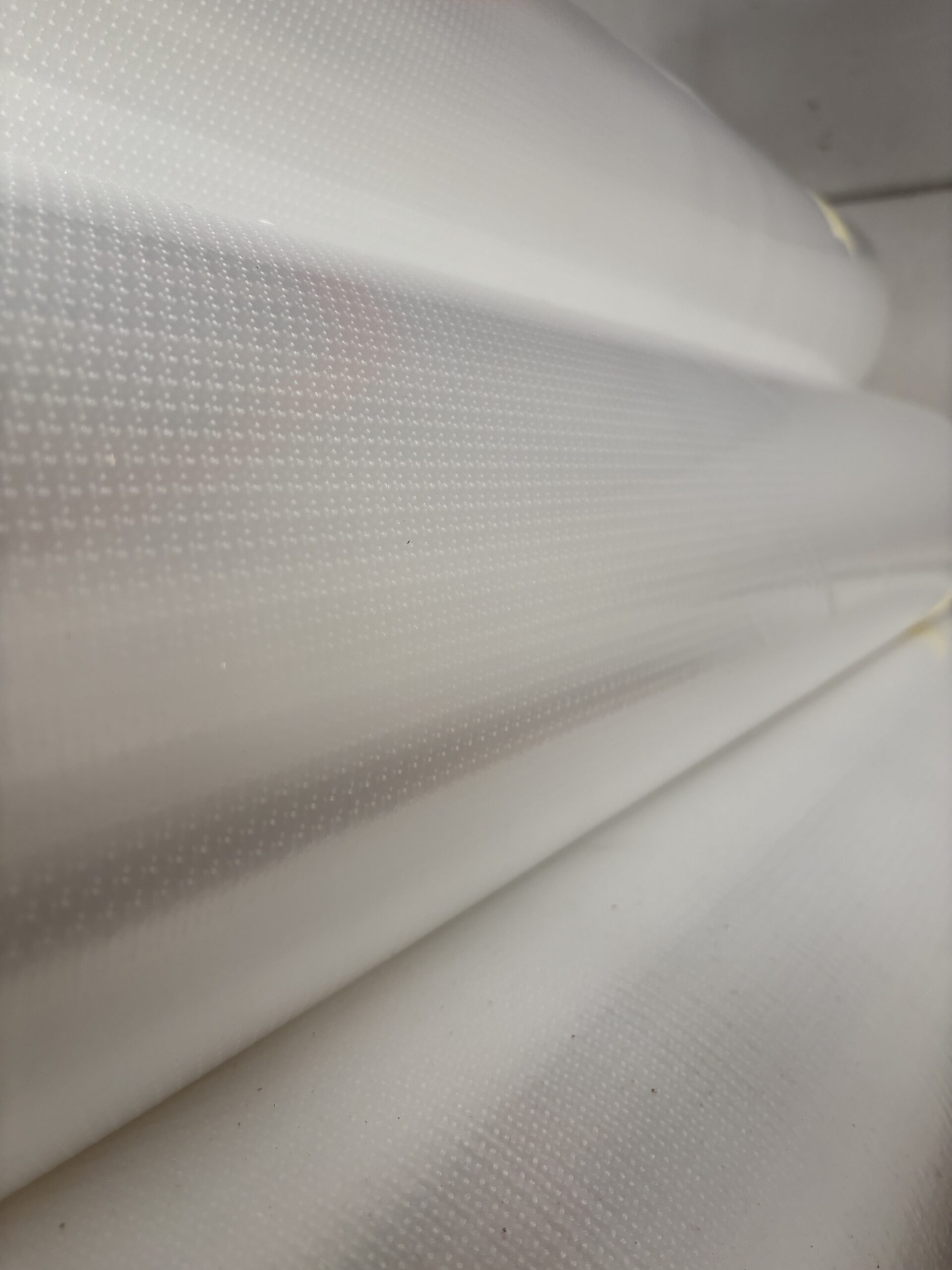
Perforation of films and nonwovens for breathability and functional applications.
Our hotmelt spraycoating applies a layer of thermoplastic adhesive onto a substrate, which cools and solidifies into a strong, durable bond. The spray application gives precise control over coating weight and pattern.
We work with two main adhesive types:
CoPET (copolyester) — superb chemical resistance and toughness, suited for packaging and demanding industrial environments
CoPA (copolyamide) — excellent adhesion and flexibility, ideal for technical textiles and automotive applications
The coated material can be used inline in your own production, or we can add a lamination step to combine it with a second layer.
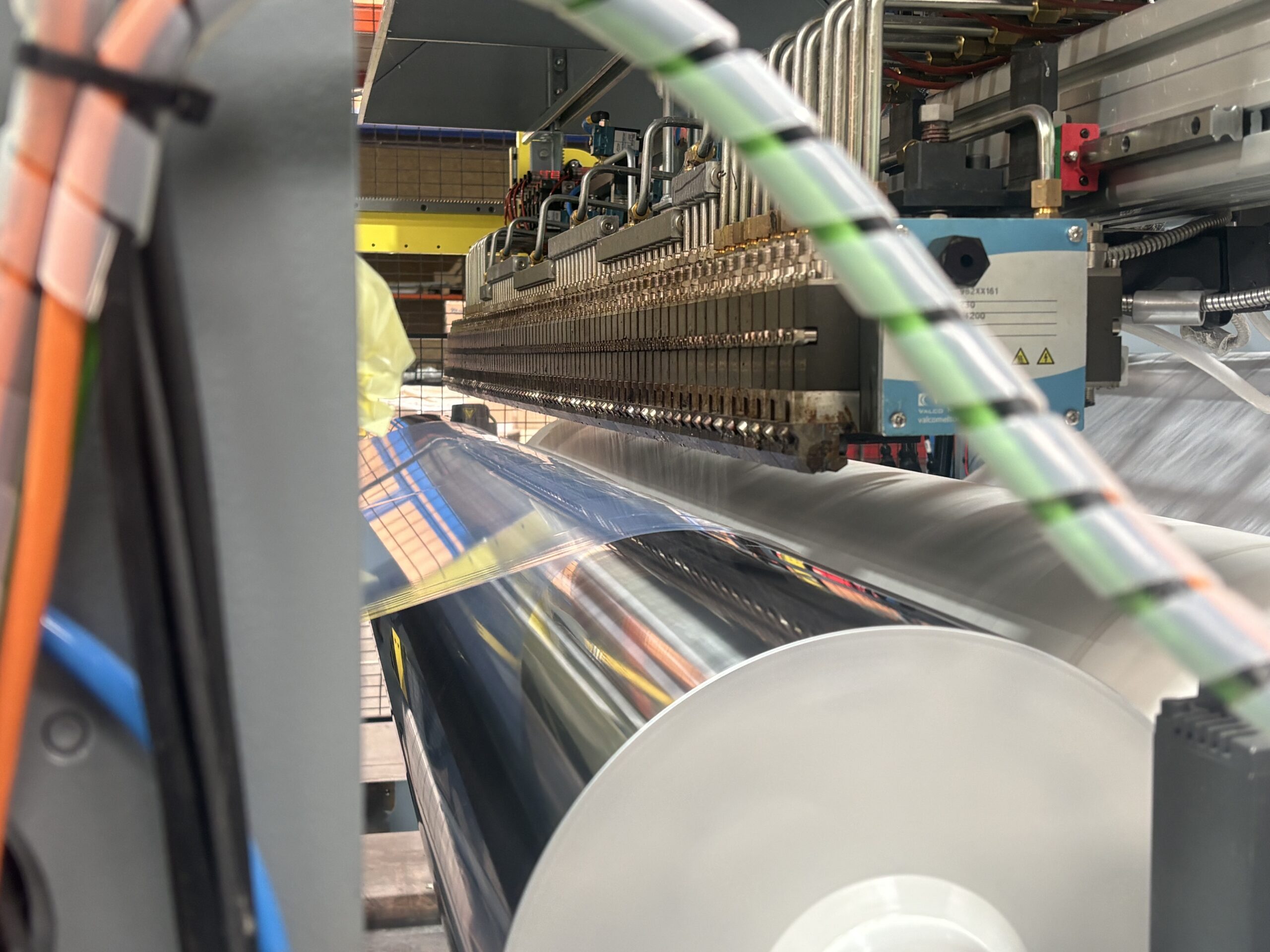
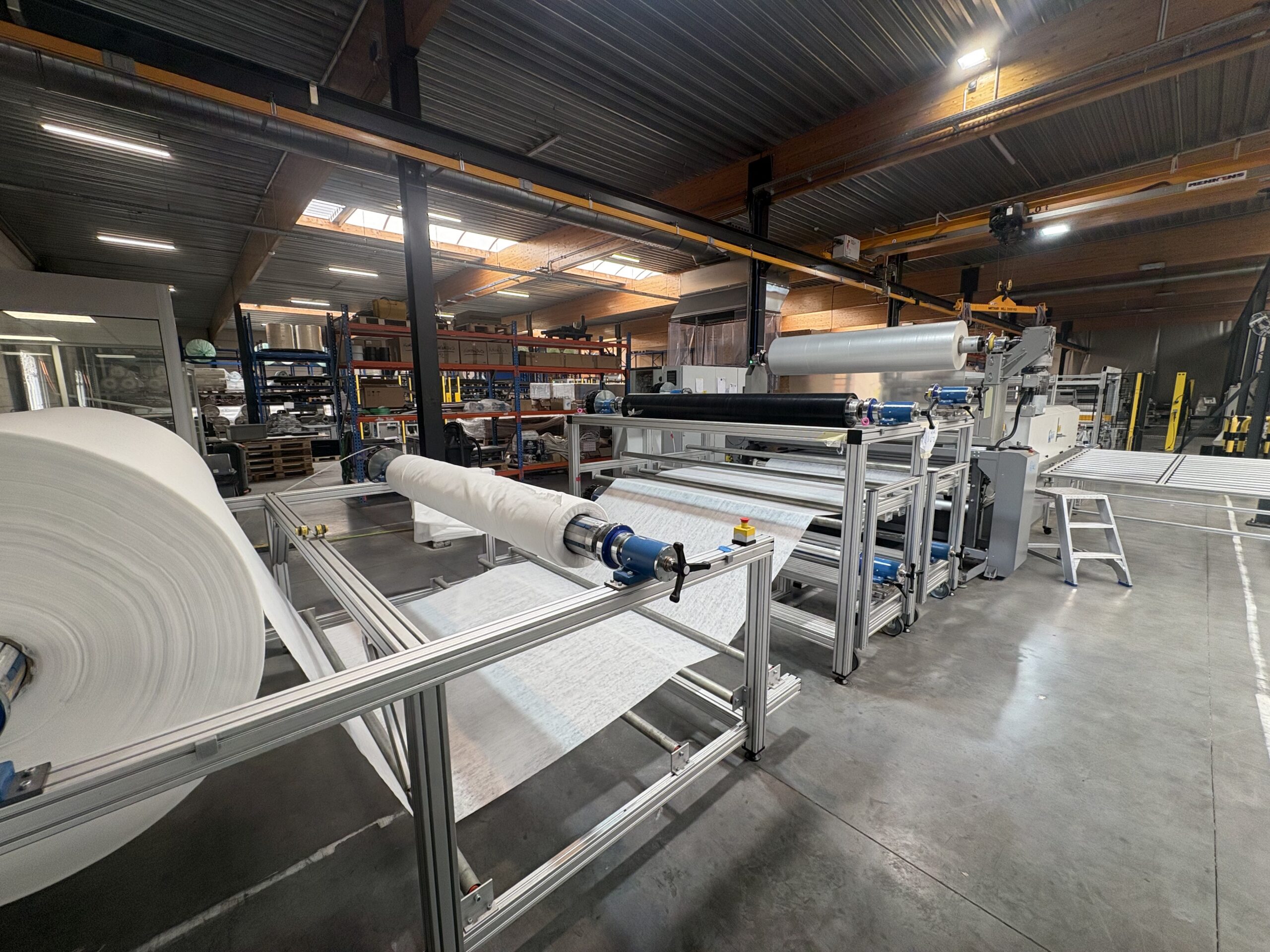
Our double belt flatbed laminator bonds multiple material layers together under precisely controlled heat and pressure. The continuous double-belt system ensures even lamination across the full width, without air pockets or distortion.
This process is ideal for combining films, nonwovens and composites into a single functional product — up to 7 layers in one pass.
Applications include multi-layer laminates, coated nonwovens and technical composites for a wide range of industries.
Our perforation process creates controlled openings in films and nonwovens to influence the material’s breathability, permeability and flexibility. We adjust parameters such as perforation depth, line speed and material selection to match your application requirements.
Perforation can be applied as a standalone treatment or combined with our coating and lamination processes for a fully finished product.
Typical applications include breathable membranes, filtration media, hygiene products and technical textiles that require controlled air or moisture flow.
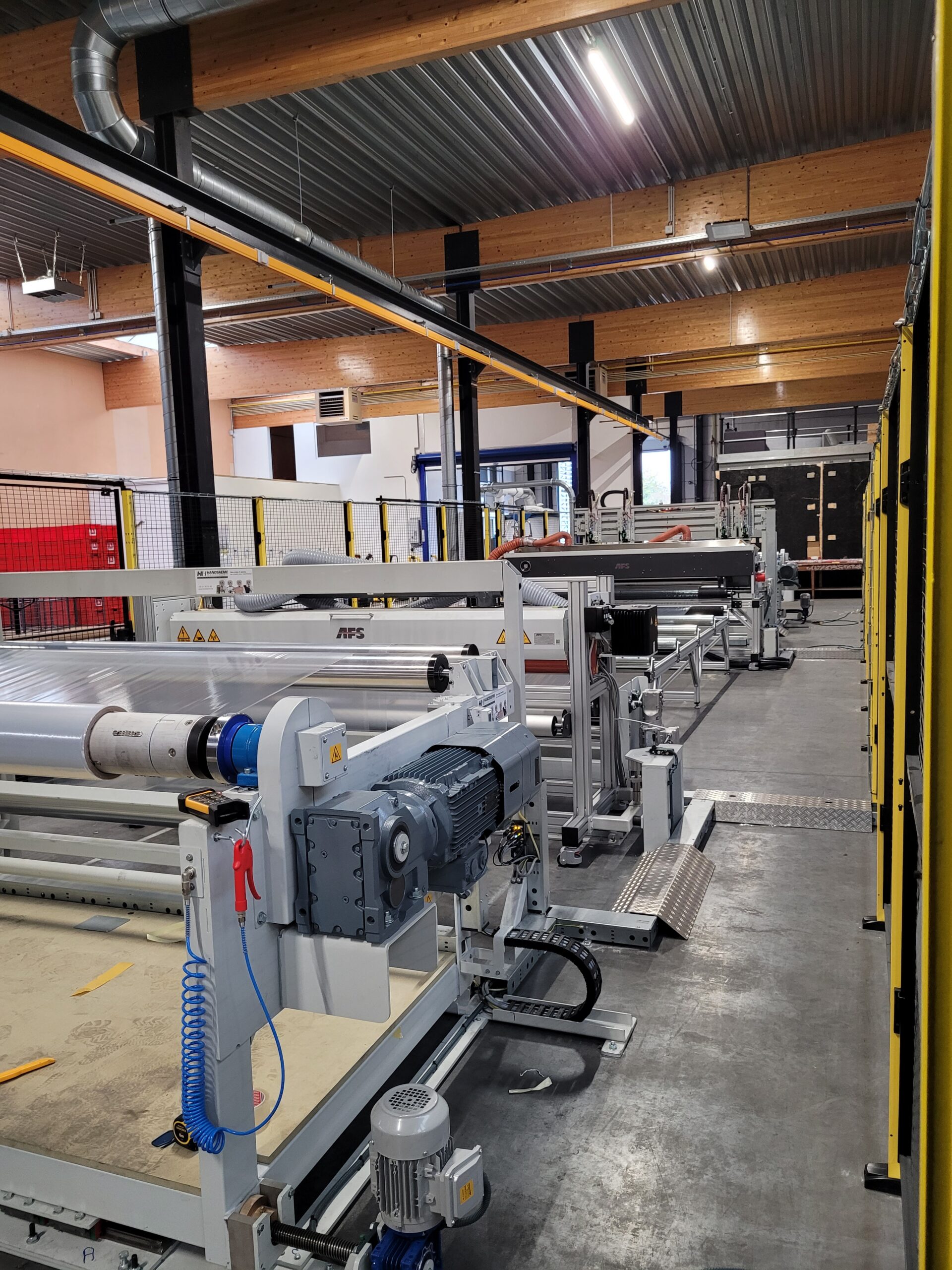
Corona treatment uses a high-voltage electrical discharge to activate the surface of films and nonwovens. This increases the material’s surface energy, improving adhesion, printability and wettability.
Many materials — especially plastic films — have naturally low surface energy, which makes it hard for adhesives, inks or coatings to bond properly. Corona treatment solves this by preparing the surface just before the next processing step.
We integrate corona treatment inline with our coating and lamination processes, ensuring optimal bonding without adding extra handling.